

Alpha-1 antitrypsin deficiency (AATD):
An underdiagnosed genetic driver of COPD
Why should AATD be considered in COPD?
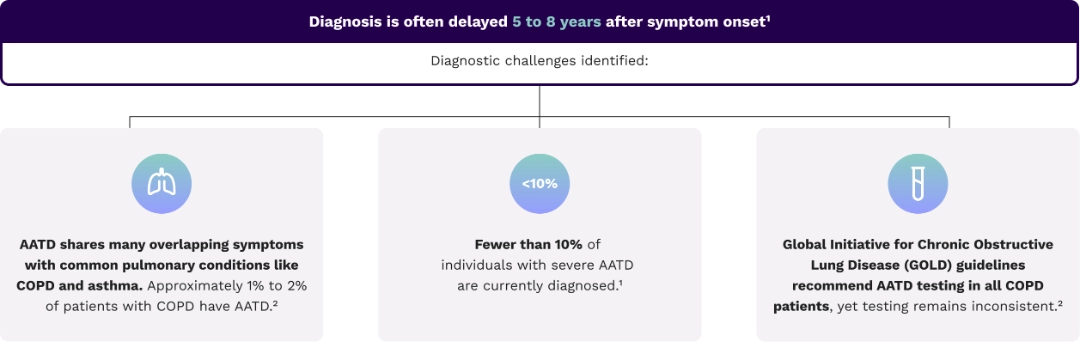
Because AATD is frequently underdiagnosed and may present similarly to chronic obstructive pulmonary disease (COPD), it can contribute to delayed diagnosis and disease progression.

Fewer than 10% of severe AATD patients are currently diagnosed.1

Patients diagnosed with COPD or severe asthma may have underlying AATD, which is estimated to account for 1% to 2% of COPD cases.2

Low serum alpha-1 antitrypsin (AAT) protein levels may mean less lung protection.3

There remains an unmet need for longer-acting therapies with less frequent dosing that help maintain normal AAT levels.
What is AATD?
AATD is an inherited genetic disorder caused by pathogenic variants in the SERPINA1 gene.4 AATD affects approximately 100,000 individuals in the United States.1
Disease severity varies widely based on3:

Genotype

Serum AAT levels

Lifestyle and environmental exposures

Age and comorbidities
Why is AATD difficult to diagnose?
Patients may go without a correct diagnosis for years before one is obtained.

How does AATD progress and damage the lungs?
AATD is a progressive disease that may cause irreversible lung damage
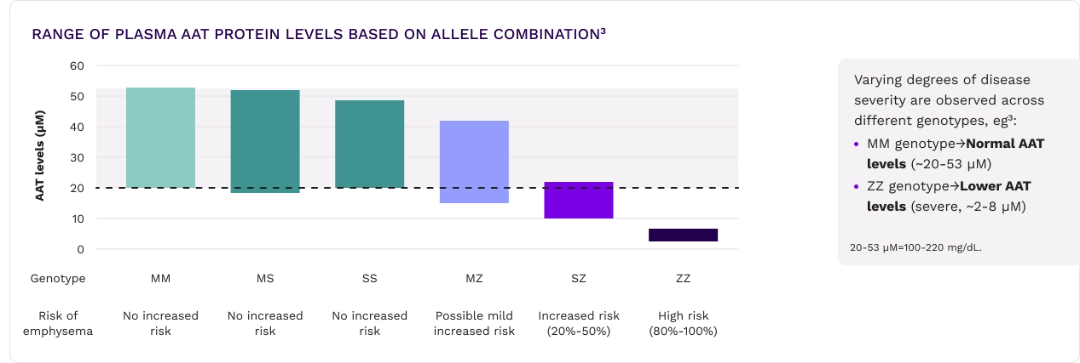
Early-onset emphysema is a hallmark of AATD
Lower levels of the AAT protein correlate with higher risk of emphysema3
What is the economic impact of AATD?
The economic burden of AATD reflects chronic disease management, frequent exacerbations, and advanced interventions

5% of AATD patients will eventually need lung transplants6

Higher rates of hospitalizations and emergency department visits
In a 2021 study, the incidence of AATD-associated pulmonary events among patients with a severe AATD clinical course was 1.8 to 2.8 times greater than in patients with a nonsevere AATD clinical course.7

Escalating costs associated with disease progression
Together, physician visits and inpatient stays account for ~60% to 70% of nondrug medical costs in AATD, reflecting recurrent exacerbations, complications, and ongoing disease monitoring.8

A clear unmet need remains for new treatments
Plasma-derived augmentation therapy is currently the only established treatment available and has been for decades.
- Requires lifelong weekly intravenous infusions
- Produces peaks as well as troughs in serum AAT levels that do not steadily remain above the normal threshold9
There is an unmet need for a longer-acting therapy that enables less frequent dosing than plasma-derived AAT while helping maintain normal AAT levels and slowing lung function decline.
,

,

References: 1. Ashenhurst JR, Nhan H, Shelton JF, et al. Prevalence of alpha-1 antitrypsin deficiency, self-reported behavior change, and health care engagement among direct-to-consumer recipients of a personalized genetic risk report. Chest. 2022;161(2):373-381. doi:10.1016/j.chest.2021.09.041 2. Smith MD, Couch KA. Improving screening for alpha-1 antitrypsin deficiency in adults with COPD. Jt Comm J Qual Patient Saf. 2025;51(10):659-665. doi:10.1016/j.jcjq.2025.07.002 3. Mulkareddy V, Roman J. Pulmonary manifestations of alpha 1 antitrypsin deficiency. Am J Med Sci. 2024;368(1):1-8. doi:10.1016/j.amjms.2024.04.002 4. Turner AM, Ficker JH, Vianello A, et al. Advancing the understanding and treatment of lung pathologies associated with alpha 1 antitrypsin deficiency. Ther Adv Respir Dis. 2025;19:17534666251318841. doi:10.1177/17534666251318841 5. Torres-Durán M, Lopez-Campos JL, Barrecheguren M, et al. Alpha-1 antitrypsin deficiency: outstanding questions and future directions. Orphanet J Rare Dis. 2018;13(1):114. doi:10.1186/s13023-018-0856-9 6. Zamora MR, Ataya A. Lung and liver transplantation in patients with alpha-1 antitrypsin deficiency. Ther Adv Chronic Dis. 2021;12(suppl):20406223211002988. doi:10.1177/20406223211002988 7. Herrera EM, Joseph C, Brouwer ES, Gandhi V, Czorniak M. Alpha-1 antitrypsin deficiency-associated clinical manifestations and healthcare resource use in the United States. COPD. 2021;18(3):315-324. doi:10.1080/15412555.2021.1917532 8. Sieluk J, Levy J, Sandhaus RA, Silverman H, Holm KE, Mullins CD. Costs of medical care among augmentation therapy users and non-users with alpha-1 antitrypsin deficiency in the United States. Chronic Obstr Pulm Dis. 2018;6(1):6-16. doi:10.15326/jcopdf.6.1.2017.0187 9. Teschler H. Long-term experience in the treatment of α1-antitrypsin deficiency: 25 years of augmentation therapy. Eur Respir Rev. 2015;24(135):46-51. doi:10.1183/09059180.10010714
This site is intended for US payers only.
© 2026 Sanofi. All rights reserved.
Leave site modal

You are about to leave SanofiMarketAccess website.
Sanofi does not review or control the content of non-Sanofi websites.